Blood Glucose mmol/L to mg/dL: Complete Conversion Guide
Convert blood glucose between mmol/L and mg/dL, understand normal ranges, and read your test results. Learn the conversion formula and what your numbers mean.
Understanding Blood Glucose Units
Blood glucose (blood sugar) levels are measured using two different unit systems around the world. Understanding both is essential when reading lab results from different countries.
What is mmol/L?
Millimoles per liter (mmol/L) is the SI (International System of Units) measurement used in most countries worldwide:
- United Kingdom
- Canada
- Australia
- Europe
- Most of Asia
- New Zealand
This unit measures the concentration of glucose in terms of the number of molecules (in millimoles) per liter of blood.
What is mg/dL?
Milligrams per deciliter (mg/dL) is the traditional unit primarily used in:
- United States
- Germany
- Japan
- Several Latin American countries
This unit measures the weight of glucose (in milligrams) per deciliter (100 milliliters) of blood.
The Conversion Formula
Why multiply by 18.018?
The conversion between mmol/L and mg/dL is based on the molecular weight of glucose (180.18 g/mol):
- 1 mole of glucose = 180.18 grams
- 1 millimole (mmol) = 180.18 milligrams
- 1 liter = 10 deciliters
Therefore: 1 mmol/L = (180.18 mg / 10 dL) = 18.018 mg/dL
Conversion Formulas
| From | To | Formula |
|---|---|---|
| mmol/L | mg/dL | Multiply by 18.018 |
| mg/dL | mmol/L | Divide by 18.018 |
Quick Examples
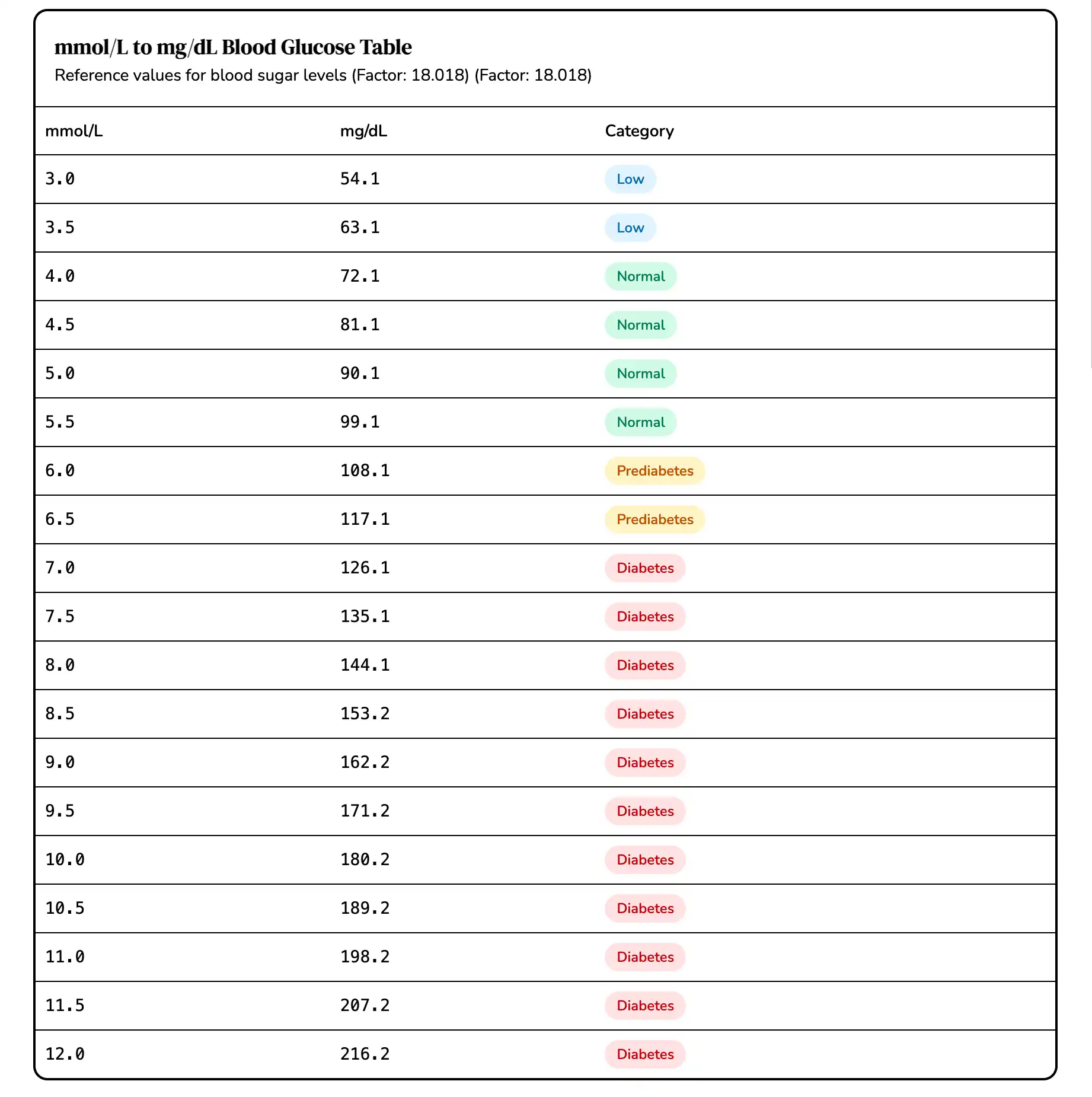
Blood Glucose Converter
From: mmol/L
Result
99.1mg/dL
Key Blood Sugar Thresholds
Understanding key blood sugar values can help you interpret your test results:
Critical Thresholds (Quick Reference)
| Value | Meaning | Learn More |
|---|---|---|
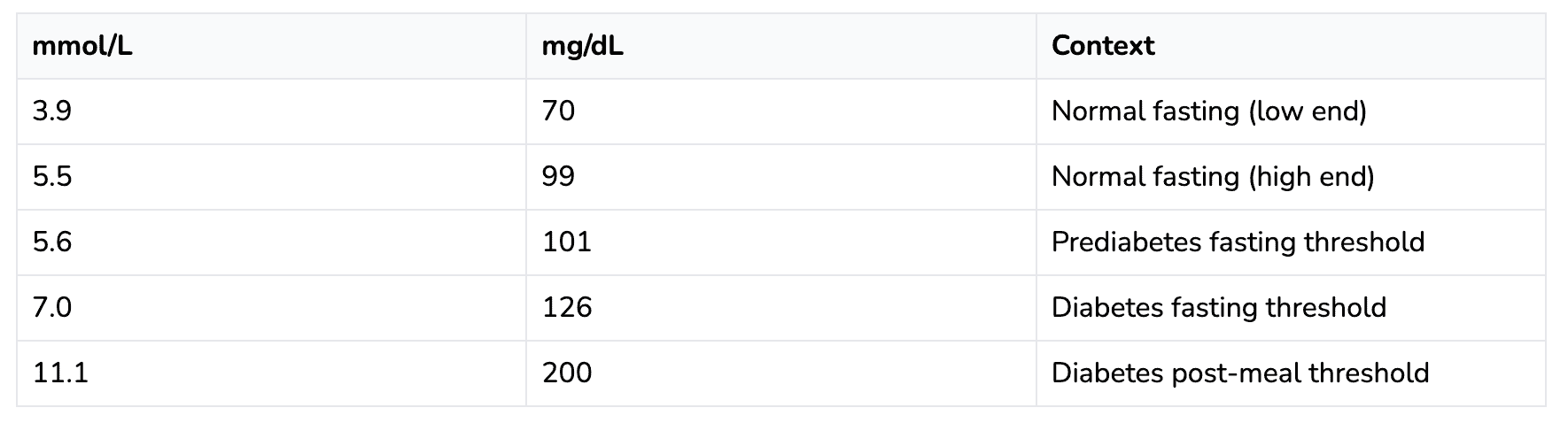
| 5.6 mmol/L (101 mg/dL) | Prediabetes threshold | → Detailed Guide |
| 7 mmol/L (126 mg/dL) | Diabetes diagnosis point | → Detailed Guide |
| 11.1 mmol/L (200 mg/dL) | Post-meal diabetes threshold | → Detailed Guide |
Other Important Values
4.7 mmol/L (85 mg/dL) - Normal Upper Limit
This is within the normal fasting blood sugar range (3.9-5.5 mmol/L or 70-99 mg/dL). A reading of 4.7 mmol/L indicates healthy glucose metabolism.
3.0 mmol/L (54 mg/dL) - Hypoglycemia Danger Zone
This indicates hypoglycemia (low blood sugar) and may require immediate attention. Symptoms include shakiness, sweating, confusion, and rapid heartbeat.
Blood Sugar Target Ranges
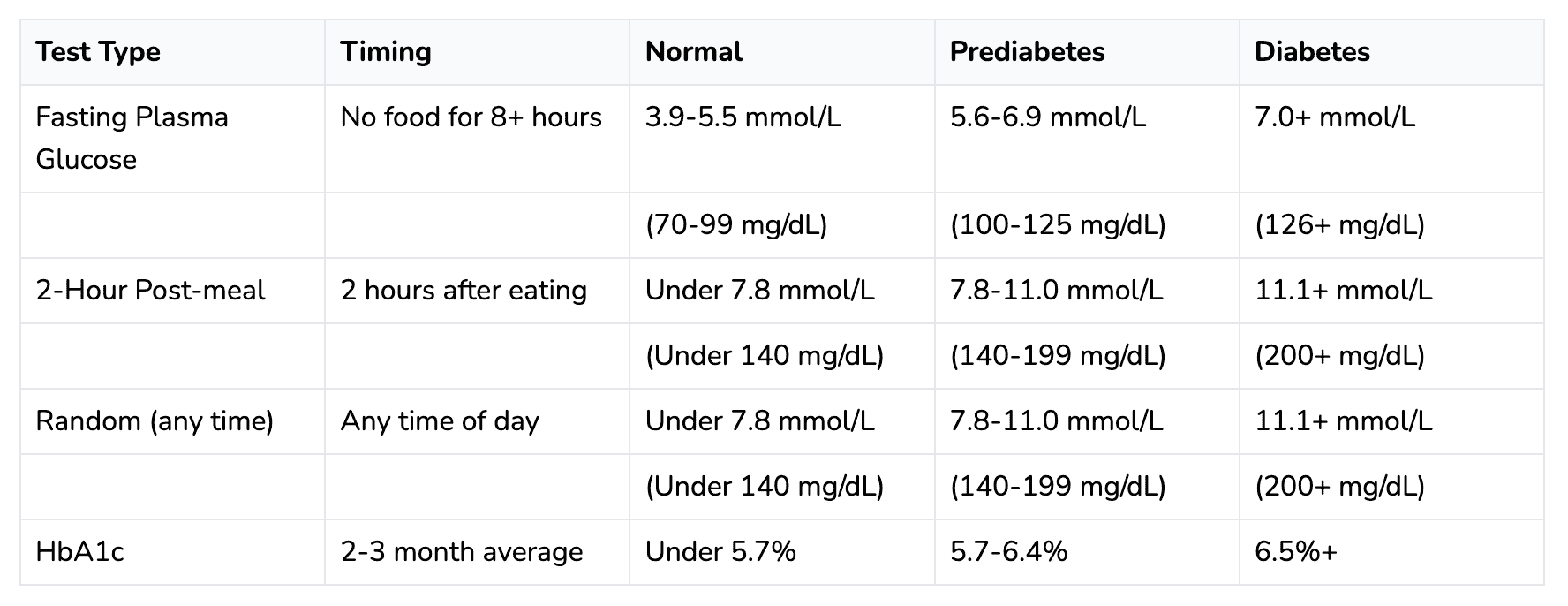
Different tests measure blood sugar at different times. Here are the target ranges:
By Test Type
A1c to Average Blood Sugar Correlation
HbA1c provides an estimate of average blood sugar over the past 2-3 months.
Key A1C Thresholds:
| HbA1c (%) | Estimated Average Glucose | Category |
|---|---|---|
| 5.7% | 7.0 mmol/L (126 mg/dL) | Prediabetes threshold |
| 6.5% | 8.6 mmol/L (154 mg/dL) | Diabetes diagnosis |
When to Test Blood Sugar
Fasting Blood Sugar
- Timing: First thing in the morning, before eating or drinking anything
- Purpose: Baseline glucose level
- Normal: 3.9-5.5 mmol/L (70-99 mg/dL)
Post-meal (Postprandial) Blood Sugar
- Timing: 2 hours after the start of a meal
- Purpose: How well your body processes glucose
- Normal: Below 7.8 mmol/L (140 mg/dL)
HbA1c Test
- Timing: Any time (no fasting required)
- Purpose: 2-3 month average blood sugar
- Normal: Below 5.7%
Reading Your Test Results
What Your Number Means
| Range | Category | Key Details |
|---|---|---|
| Below 3.9 mmol/L (70 mg/dL) | Hypoglycemia | May indicate low blood sugar, especially with symptoms |
| 3.9-5.5 mmol/L (70-99 mg/dL) | Normal | Healthy fasting range |
| 5.6-6.9 mmol/L (100-125 mg/dL) | Prediabetes | → Learn: 100 mg/dL threshold |
| ≥7 mmol/L (≥126 mg/dL) | Diabetes (fasting) | → Learn: 7 mmol/L threshold |
| 7.8-11.0 mmol/L (140-199 mg/dL) | Prediabetes (post-meal) | Impaired glucose tolerance after eating |
| ≥11.1 mmol/L (≥200 mg/dL) | Diabetes (post-meal) | → Learn: 11.1 mmol/L threshold |
FAQ
What is 7.0 mmol/L to mg/dL?
7.0 mmol/L = 126 mg/dL
This is the fasting plasma glucose threshold typically used for diabetes diagnosis.
What is 100 mg/dL to mmol/L?
100 mg/dL = 5.6 mmol/L
This is the prediabetes fasting threshold.
What is 4.7 mmol/L to mg/dL?
4.7 mmol/L = 85 mg/dL
This is within the normal fasting blood sugar range (3.9-5.5 mmol/L or 70-99 mg/dL). A reading of 4.7 mmol/L indicates healthy glucose metabolism and is well within the target range for fasting blood sugar.
What should blood sugar be 2 hours after eating?
Normal blood sugar 2 hours after eating should be below 7.8 mmol/L (140 mg/dL).
- Normal: Below 7.8 mmol/L (140 mg/dL)
- Prediabetes: 7.8-11.0 mmol/L (140-199 mg/dL)
- Diabetes: 11.1 mmol/L (200 mg/dL) or higher
What is a normal blood sugar level?
Normal blood sugar levels vary by when you last ate:
| Test Type | Normal Range |
|---|---|
| Fasting (no food 8+ hours) | 3.9-5.5 mmol/L (70-99 mg/dL) |
| 2 hours after eating | Below 7.8 mmol/L (140 mg/dL) |
| Random (any time) | Below 7.8 mmol/L (140 mg/dL) |
Why do different countries use different units?
The difference is historical and regulatory:
- mmol/L: Based on the SI (metric) system, adopted by most countries for scientific and medical consistency
- mg/dL: Traditional unit that persists in the United States due to established medical practices and reference ranges
Both measurements are accurate—they simply express the same value in different ways.
How do I convert my blood sugar results?
To convert from mmol/L to mg/dL: Multiply by 18.018
- Example: 5.5 mmol/L × 18.018 = 99 mg/dL
To convert from mg/dL to mmol/L: Divide by 18.018
- Example: 100 mg/dL ÷ 18.018 = 5.6 mmol/L
You can use the converter above to quickly convert between units.
Is 99 mg/dL normal for fasting?
Yes, 99 mg/dL (5.5 mmol/L) is within the normal fasting range.
The normal fasting blood sugar range is 70-99 mg/dL (3.9-5.5 mmol/L). However, 99 mg/dL is at the upper end of normal, so monitoring is recommended.
What is a dangerous blood sugar level?
Dangerously low blood sugar (Hypoglycemia): Below 3.9 mmol/L (70 mg/dL)
- Symptoms: Shaking, sweating, confusion, rapid heartbeat
- Action: Consume fast-acting glucose immediately
Dangerously high blood sugar (Hyperglycemia): Above 16.7 mmol/L (300 mg/dL)
- Symptoms: Extreme thirst, frequent urination, blurred vision
- Action: Contact your healthcare provider
What is the diabetes diagnosis criteria?
Diabetes is typically diagnosed when:
- Fasting blood sugar: 7.0 mmol/L (126 mg/dL) or higher on two separate tests
- HbA1c: 6.5% or higher
- 2-hour post-meal: 11.1 mmol/L (200 mg/dL) or higher during an oral glucose tolerance test
- Random blood sugar: 11.1 mmol/L (200 mg/dL) or higher with diabetes symptoms
Related Resources
- Home Converter - Use our interactive blood glucose converter
- Blood Sugar Monitoring - CDC guide on monitoring blood sugar
- Understanding A1C - American Diabetes Association
References
- American Diabetes Association. Standards of Care in Diabetes—2024
- World Health Organization. Definition and Diagnosis of Diabetes
- National Institute for Health and Care Excellence (NICE). Type 2 Diabetes in Adults. 2022
- Mayo Clinic. Diabetes - Diagnosis and Treatment
- Centers for Disease Control and Prevention. Testing for Diabetes
- National Institute of Diabetes and Digestive and Kidney Diseases. Tests for Diabetes
Medical Disclaimer: This converter and guide are for informational purposes only. Always consult with healthcare professionals for medical advice, diagnosis, or treatment. Never disregard professional medical advice or delay seeking it based on information from this tool.